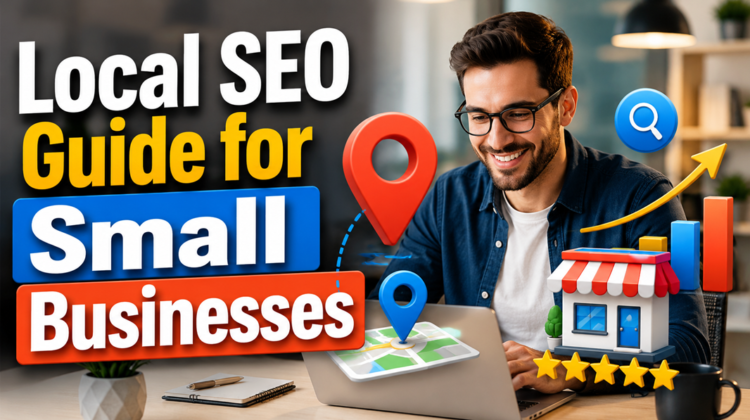
Local customers are often the most valuable customers a small business can attract. They live nearby, need a product or service, and are usually ready to contact, visit, book, or buy from a business that appears trustworthy and convenient. The challenge is making sure they find your business before they find a competitor.
This is where local SEO becomes important.
For small businesses, local SEO provides an opportunity to compete with larger brands without requiring an enormous advertising budget. A properly optimized website, accurate business information, positive customer reviews, locally relevant content, and a complete Google Business Profile can help a small company attract qualified customers consistently.
This comprehensive local SEO guide explains how small businesses can build a strong local presence, improve search visibility, generate more enquiries, and turn local searches into real customers.
What Is Local SEO?
Local SEO is the process of improving a business’s online presence so that it appears more prominently in searches performed by people within a specific location.
Traditional SEO focuses on improving a website’s visibility for a broad range of search queries. Local SEO focuses more specifically on searches that have geographical intent. This means the person searching wants a business, product, professional, or service located near them or available in a particular city.
For example, someone searching for “website designer” may be looking for general information or a service provider from any location. Someone searching for “website designer in Noida” has a much clearer local intention. The second person is likely comparing nearby companies and may be closer to making a decision.
Local SEO affects visibility across regular organic search results, Google Maps, local business listings, and the local results that often appear near the top of a search results page.
A successful local SEO strategy connects all these areas. Your website explains what you offer, your Google Business Profile provides essential local information, reviews establish trust, and other websites confirm that your business is genuine and relevant within its area.
Why Local SEO Matters for Small Businesses
Small businesses usually serve customers within a defined location. A restaurant may serve people within a few kilometres, while a home services company may cover several cities. A consultant or professional service provider may serve an entire region but still rely heavily on customers searching for local expertise.
Local SEO helps these businesses reach people at the exact moment they are searching for a solution.
A person searching for an emergency electrician is not casually browsing. They need immediate assistance. Similarly, someone searching for a nearby clinic, salon, lawyer, restaurant, or repair service may be ready to call or visit within minutes.
Local search visibility can therefore generate highly qualified traffic. These visitors are not simply reading general information. They are often looking for opening hours, directions, prices, reviews, contact details, availability, or booking options.
Local SEO also supports trust. When a business appears consistently across search results, maps, directories, reviews, and its own website, potential customers are more likely to view it as established and reliable.
Unlike paid advertising, local SEO can continue producing visibility after the initial optimization work has been completed. It still requires regular updates, but a strong local presence can become a long-term source of calls, enquiries, appointments, and store visits.
How Local Search Rankings Work
Google explains that local results are mainly influenced by relevance, distance, and prominence. Relevance refers to how closely a business matches the search. Distance considers how far the business is from the searcher or the location included in the query. Prominence relates to how well known and credible the business appears based on information such as links, mentions, and reviews.
Small businesses cannot directly control the location of every searcher. However, they can improve relevance and prominence by providing accurate information, choosing suitable business categories, creating useful local content, earning reviews, and building authority.
Local search results can vary from one person to another because location plays an important role. A company may rank strongly when someone searches nearby but appear lower when the same search is conducted from another part of the city.
This means local rankings should not be judged through a single manual search. Businesses need to examine overall visibility, website traffic, calls, direction requests, leads, and rankings across different areas.
Build a Strong Local SEO Foundation
Before creating content or building links, make sure your business information is accurate and consistent.
Your business name, address, and phone number are often referred to as NAP information. Search engines use these details to connect information about your business across your website, Google Business Profile, directories, social profiles, and other online sources.
The business name should match the name customers see on your signage, invoices, website, and other official materials. Avoid adding unnecessary keywords to the name because doing so can create inconsistency and may violate platform guidelines.
Your address should be written in the same format wherever possible. Small differences such as abbreviations are not always harmful, but major inconsistencies can confuse customers and search systems. Your primary phone number should also remain consistent and should ideally connect directly to the business.
Businesses that serve customers at their locations should display accurate service areas instead of using false offices or virtual addresses. Google requires businesses to represent themselves accurately, use precise addresses or service areas, select only the categories needed to describe the core business, and generally maintain one profile per business location.
Create and Optimize Your Google Business Profile
A Google Business Profile is one of the most important components of local SEO. It controls how important business details may appear in Google Search and Maps.
Start by claiming and verifying your profile. Verification confirms that you are authorized to manage the business. Once verified, complete every relevant section carefully.
Use your genuine business name without adding promotional phrases, city names, or keywords that are not part of the official name. Select a primary category that describes the main service or business type. Additional categories may be added when they accurately represent important services.
Write a clear business description explaining what the company provides, whom it serves, and where it operates. Avoid filling the description with repeated keywords. The goal is to help customers understand the business quickly.
Add your correct address, phone number, website link, opening hours, service areas, accessibility details, and appointment links where applicable. Special hours should be updated during holidays, events, or temporary closures.
Upload genuine, high-quality photos of the business, team, location, products, services, equipment, and completed work. Real images help customers understand what to expect and may improve engagement with the profile.
Review the profile regularly. Business information can become outdated when hours, services, phone numbers, or website pages change. An incomplete or inaccurate profile can result in missed calls, disappointed customers, and reduced trust.
Conduct Local Keyword Research
Local keyword research identifies the words potential customers use when looking for businesses like yours.
Begin with your main products and services. Then combine those topics with the locations you serve. A dental clinic might target searches related to dental implants, root canal treatment, teeth whitening, and emergency dentistry along with its city, neighbourhood, or nearby areas.
Local searches can take many forms. Some users include a city, while others search by neighbourhood, landmark, district, or postal area. Others use phrases such as “near me,” “open now,” “closest,” “affordable,” or “best.”
Do not create separate pages for every minor keyword variation. Search engines can understand closely related phrases. Instead, build comprehensive pages that answer the complete search intent.
A service page for an interior designer in Jaipur can naturally discuss residential design, commercial interiors, renovation planning, space optimization, consultation, project management, and the areas served. This is more useful than producing several thin pages containing almost identical information.
Keyword research should also consider customer language. Business owners may use technical terminology, while customers may search using simpler words. Talk to your sales team, support staff, receptionists, and customers to understand the questions people commonly ask.
Optimize Your Website for Local Searches
Your website remains the central source of information about your business. The Google Business Profile may introduce customers to the company, but the website often provides the details required to make a final decision.
The homepage should clearly explain what the business does and where it operates. Visitors should not have to search through several pages to understand the main service area.
Use the primary service and location naturally within the page title, main heading, introduction, body content, image descriptions, and meta description. Do not repeat keywords excessively. The content should remain natural and useful.
Each important service should have a dedicated page. A law firm offering property law, corporate law, family law, and dispute resolution should explain each service properly rather than placing a short description of every service on one page.
Include trust-building information such as experience, qualifications, processes, customer testimonials, case examples, warranties, industry memberships, pricing guidance, or frequently asked questions.
Google recommends creating helpful, reliable content for people rather than producing pages mainly to manipulate rankings. It also advises website owners to consider the different words users may search while relying on natural, useful content instead of attempting to include every possible keyword variation.
Create Useful Location Pages
Location pages are valuable for businesses serving multiple cities or areas. However, each page should provide genuine information rather than repeating the same content with only the city name changed.
A strong location page explains which services are available in that area, how the company serves local customers, which neighbourhoods are covered, how customers can reach the business, and what makes the service relevant to that location.
Include accurate contact details, opening hours, directions, nearby landmarks, parking information, service limitations, and local testimonials where available. You may also discuss projects completed in that area, common local customer needs, or specific challenges associated with the location.
Avoid creating hundreds of weak pages for places where you have no genuine presence or service capability. These pages provide little value and can damage the overall quality of the website.
A physical branch should have its own page containing the branch address, phone number, team information, services, directions, hours, and embedded map. A service area page should make it clear that the company travels to customers rather than operating from a local storefront.
Publish Locally Relevant Content
Local SEO content should go beyond repeatedly publishing articles about your services. Useful local content connects your expertise with the needs and interests of people in your area.
A property company might publish neighbourhood guides, market updates, buying advice, infrastructure developments, and comparisons between local areas. A healthcare provider could explain seasonal health concerns, local appointment options, preventive care, and questions commonly asked by patients. A home improvement company could discuss weather related maintenance, building styles, local regulations, and renovation considerations.
Content should answer genuine questions and demonstrate experience. Include original observations, examples, photographs, data, customer concerns, and practical recommendations wherever possible.
Google’s current guidance continues to emphasize helpful, reliable, people-focused information. Search optimization works best when it supports valuable content rather than replacing it.
Improve Your Local On-Page SEO
On-page SEO helps search engines understand the purpose and geographical relevance of each page.
Every important page should have a unique title that describes its main topic. The meta description should summarize the page clearly and encourage relevant users to visit. The main heading should confirm what the page covers, while supporting headings should organize the information into understandable sections.
Include location information naturally where it is helpful. A service page should mention the main city and service area, but the location should not be inserted into every sentence.
Internal links are also important. Link relevant blog posts to service pages, connect location pages to related services, and help visitors move easily between useful resources.
Images should include descriptive file names and alternative text when appropriate. Alternative text should describe the image for accessibility rather than serving as a place to repeat keywords.
Contact details should be easy to find. Include clear calls to action such as requesting a quote, booking an appointment, calling the office, checking availability, or visiting the location.
Strengthen Technical SEO
Technical problems can prevent a well-written website from performing effectively.
Make sure search engines can crawl and index important pages. Check that pages are not accidentally blocked by incorrect settings, robots instructions, password protection, or noindex tags.
Use secure HTTPS connections, create a logical website structure, submit an XML sitemap, repair broken links, and redirect removed pages to relevant alternatives when necessary.
The website should load quickly and work properly on mobile devices. Many local searches happen while users are travelling, shopping, or looking for immediate assistance. A slow or confusing mobile experience can cause potential customers to leave before contacting the business.
Buttons should be easy to tap, phone numbers should be clickable, forms should be short, and essential information should appear clearly without requiring excessive scrolling.
Businesses can also implement LocalBusiness structured data. This markup can help search engines understand details such as business type, address, opening hours, phone number, departments, and other relevant information. Structured data should match the visible content on the website.
Structured data helps search engines interpret information, but it does not guarantee higher rankings or enhanced search results. It should support accurate website content rather than replace it.
Build Consistent Local Citations
A local citation is an online mention of your business name, address, phone number, or other identifying information.
Citations can appear in business directories, industry associations, local chambers, supplier websites, social networks, event listings, professional directories, and community websites.
Focus on reputable and relevant platforms rather than submitting the business to hundreds of low quality directories. A listing on a respected local association or industry platform is usually more valuable than dozens of listings on unrelated websites.
Audit existing citations to identify incorrect addresses, old phone numbers, duplicate listings, misspelled business names, and outdated website links. Correcting these problems improves the consistency of your online presence and reduces customer confusion.
Develop a Customer Review Strategy
Reviews influence trust and can support local visibility. Google states that review quantity and positive ratings can contribute to prominence and local ranking.
Ask genuine customers for reviews after completing a purchase, appointment, service, or project. Make the process convenient by sharing a direct review link through email, messaging, receipts, or follow up communication.
Do not purchase reviews, create fake reviews, or pressure customers to leave only positive feedback. A natural review profile usually contains a range of experiences and develops gradually.
Respond to both positive and negative reviews professionally. Thank satisfied customers for their feedback. When responding to criticism, remain calm, acknowledge the concern, and explain how the customer can contact the business for assistance.
Review responses are visible to future customers. A thoughtful response can demonstrate professionalism even when the original review is negative.
Earn Relevant Local Links
Links from other websites can strengthen authority and local prominence. The most useful links often come from genuine relationships rather than automated link building campaigns.
Small businesses can earn links through partnerships, local events, community projects, sponsorships, useful research, educational resources, supplier relationships, professional memberships, and local media coverage.
A restaurant may earn links from tourism websites or food events. A school may receive links from educational organizations and community programmes. A construction company may be mentioned by architects, suppliers, property websites, or local publications.
The goal is not to collect the largest possible number of links. Focus on earning relevant, credible links that make sense for the business and provide real value to users.
Track Local SEO Performance
Local SEO should be measured through business results, not rankings alone.
Monitor organic website traffic, contact form submissions, phone calls, appointment bookings, direction requests, profile views, website clicks, and enquiries from specific locations.
Google Search Console can show the search queries people use, the pages receiving impressions, and changes in organic performance. Website analytics can reveal how visitors interact with landing pages and whether they complete important actions.
Google Business Profile performance data can provide information about customer interactions with the listing.
Record your starting position before making major changes. Local SEO usually improves gradually, so compare performance over meaningful periods rather than expecting immediate results.
Common Local SEO Mistakes to Avoid
One common mistake is using inaccurate business information. Incorrect hours, disconnected phone numbers, and outdated addresses can lose customers quickly.
Another mistake is adding keywords to the official business name. The profile should reflect the real business identity rather than a list of services and locations.
Businesses also create problems when they publish duplicate location pages, ignore customer reviews, use false addresses, buy artificial links, or copy content from competitors.
Some companies focus entirely on the Google Business Profile and neglect their website. Others improve the website but leave the business profile incomplete. Strong local SEO requires both assets to support each other.
The final mistake is measuring success only through one keyword. Local visibility depends on location, search intent, service relevance, competition, and the individual searcher. Leads, calls, bookings, and revenue provide a more complete understanding of performance.
Final Thoughts
Local SEO gives small businesses a practical way to reach customers who are actively searching for nearby products and services. It improves visibility across search results, Google Maps, business profiles, and local discovery experiences.
Success begins with accurate business information, a complete Google Business Profile, a well-structured website, valuable service pages, locally relevant content, consistent citations, genuine reviews, and strong community authority.
Local SEO is not a single optimization completed once. Business information changes, competitors improve, customer expectations evolve, and new search behaviour develops. Regular updates and performance reviews are therefore essential.
Small businesses that approach local SEO with accuracy, patience, and genuine customer value can create a reliable source of enquiries and sales. The objective is not simply to appear higher in search results. It is to become the most useful, trustworthy, and relevant choice for customers in the areas the business serves.
Frequently Asked Questions About Local SEO for Small Businesses
Q1. What is local SEO in simple words?
Answer: Local SEO is the process of helping a business appear in search results when nearby customers look for its products or services. It includes optimizing the website, Google Business Profile, reviews, local listings, and location related content.
Q2. Is local SEO suitable for every small business?
Answer: Local SEO is especially useful for businesses that serve customers in particular cities, neighbourhoods, or regions. This includes shops, clinics, restaurants, agencies, consultants, contractors, professional services, and service area businesses.
Q3. How long does local SEO take to show results?
Answer: Some improvements, such as correcting business information, may produce results relatively quickly. Competitive ranking improvements often require several months because search engines need time to discover changes, evaluate authority, and compare the business with competitors.
Q4. Do I need a website for local SEO?
Answer: A Google Business Profile can provide visibility without a website, but a professional website significantly strengthens a local SEO strategy. It gives customers detailed information and allows the business to target services, locations, and questions more comprehensively.
Q5. How important are Google reviews for local SEO?
Answer: Google reviews are important for customer trust and local prominence. A steady flow of genuine reviews, positive customer experiences, and professional responses can improve the credibility and visibility of a business.